
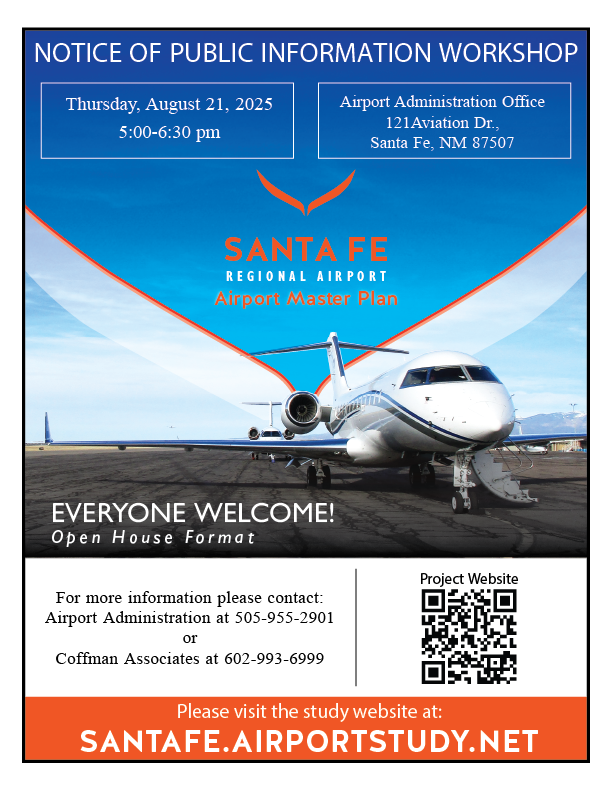
About Santa Fe Regional Airport
Santa Fe Regional Airport (SAF) has played a crucial role in the development of the City of Santa Fe since its opening in 1942. Originally constructed to train Army pilots for the war, it was eventually transferred to the City of Santa Fe to be developed to accommodate commercial flights and growing demand for air travel. Today, the airport offers multiple daily flights on American Airlines and United Airlines accommodating almost 360,000 passengers annually. In addition to commercial aviation, SAF is home to a New Mexico Army National Guard base and supports various general aviation uses including air ambulance operations, charter flights, aerial tours/photography, business aviation, flight training, and recreational flying. Its three runways situated on over 2,100 acres, supports over 51,000 annual operations and approximately 190 total based aircraft. The airport has been vital for both business and tourism, providing direct access to Santa Fe, a popular destination for arts, culture, and outdoor recreation. SAF also supports economic growth by connecting the city to major U.S. hubs, enhancing the local economy, and offering convenience for residents and visitors alike.
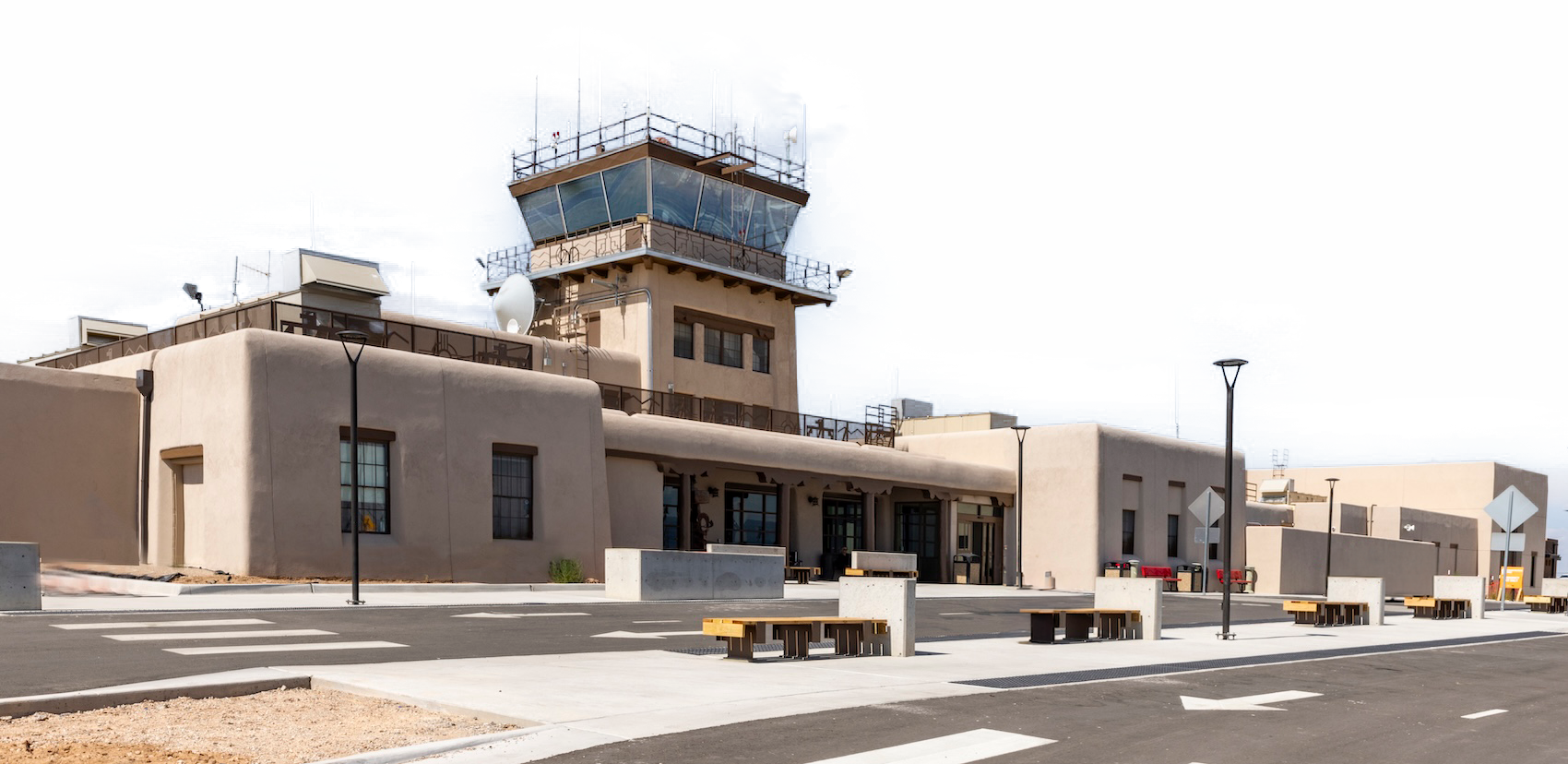
About the Master Plan
The study will be prepared by Coffman Associates, a national aviation consulting firm specializing in airport planning studies. The study process is anticipated to take approximately 18 months to complete, followed by agency reviews and approvals. The structure of the master plan follows FAA guidelines. Accordingly, the FAA will also review and accept the master plan and approve two specific elements, the aviation forecasts as well as the Airport Layout Plan (ALP), which is the set of technical drawings depicting the current and planned layout of all airport facilities.
The FAA requires certain airports, including SAF, to maintain an FAA approved ALP, which FAA uses to support grant funding for eligible capital projects. The master plan was last updated in 2018. FAA recommends these be updated every seven to ten years or as necessary to address changes at the airport and/or in the aviation industry. The airport has experienced significant increases in passenger levels in recent years, and recently completed a terminal building renovation, therefore, the timing is right to evaluate the future of the airport.
Schedule
INITIATION
- Establish a Study Design
- Establish a Planning Advisory Committee (PAC)
- Develop Graphic Schema and Project Website
INITIATION MEETINGS
- Kickoff Meeting
- PAC Meeting #1
- Public Information Workshop #1
PHASE 1
- Inventory of Existing Conditions
- Aviation Demand Forecasts
- Draft Phase One Working Papers
PHASE 1 MEETINGS
- PAC Meeting #2
- Public Information Workshop #2
PHASE 2
- Facility Requirements
- Development Alternatives Analysis
- Airport Traffic Control Tower (ATCT) Site Selection/Line of Sight Analysis
- Draft Phase Two Working Papers
PHASE 2 MEETINGS
- PAC meeting #3
- Public Information Workshop #3
PHASE 3
- Recommended Master Plan Concept
- Environmental Overview
- Capital Financial Plan
- Draft Phase Three Working Papers
PHASE 3 MEETINGS
- PAC meeting #4
- Public Information Workshop #4
FINALIZATION
- Airport Layout Plan Drawing Set
- Draft Final Master Plan Report
- Deliver Digital and Printed Copies of Finalized Report
APPROVALS
- City Council Approval Presentation
Master Plan Documents
Public Involvement
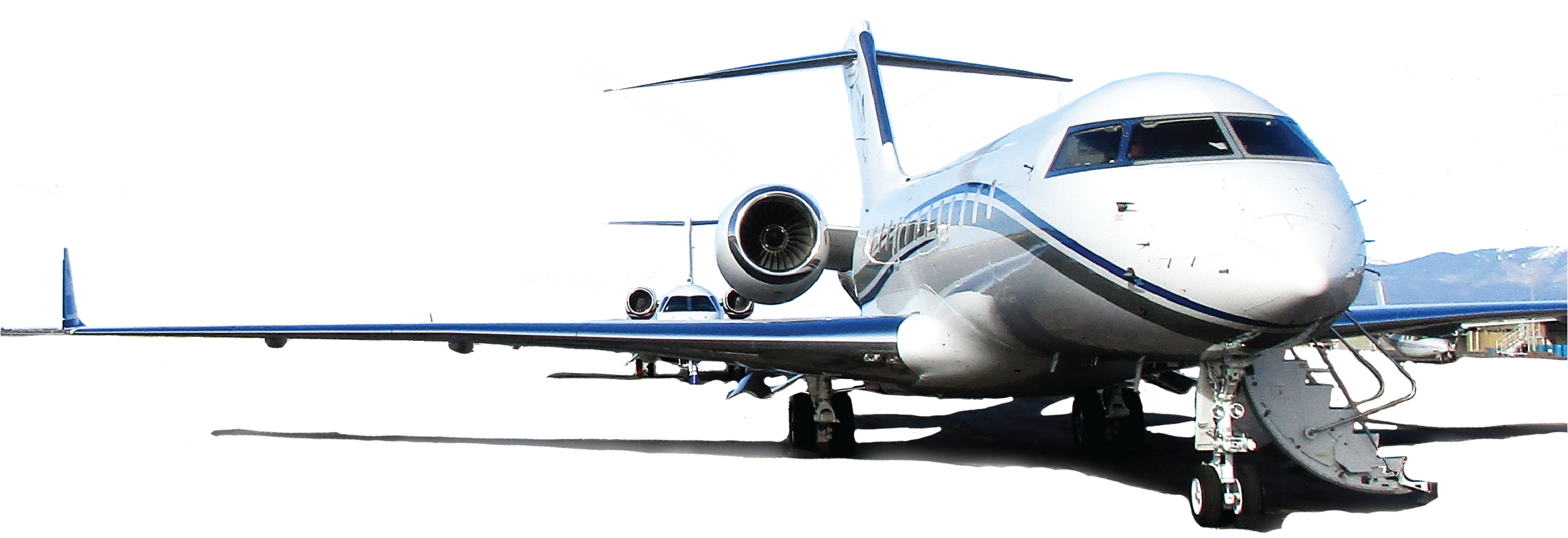
The approach to involving the community is multifaceted. The Planning Advisory Committee (PAC) is a group of airport stakeholders who have been asked to volunteer their time to aid in the development of the master plan. The PAC will be convened for four meetings to review draft chapters as developed by the consultant team. The same draft chapters made available to the PAC will be posted to this project website.
There will be four (4) public information workshops during the study process. The workshops will be conducted in an open-house format where the public can visit with the project team and ask any questions they may have related to the project. The workshops are typically scheduled in the early evening to allow those heading home from work to stop by or to allow others to come after the dinner hour. The dates and times of the workshops will be advertised locally and posted on this project website.
Draft chapters of the master plan report will be posted to this project website so that anyone can learn about the study process and review and comment on the draft material during the study. All community members are encouraged to engage in the process and provide comments to the project team. Comment sheets will be provided to the PAC and at the public information workshops, but interested parties can also utilize the “Comment” feature on this website. Direct communication with the project managers via phone or email is also acceptable. The project managers for the master plan project are listed in the bottom of this website.
Frequently Asked Questions
Comments
* Required Fields
Comments